What changed in Thailand this week?
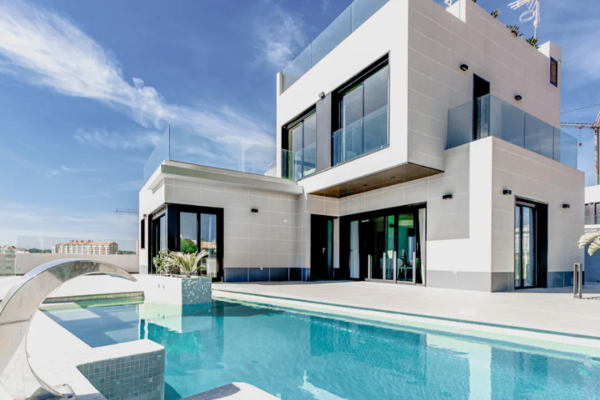
If you are planning to buy property in Phuket, news about visas, tourism, and hotel projects is worth reading together. They help you understand how demand for housing may shift, what requirements future tenants will have, and what you need to check before buying.
Early September brought several telling developments: Thailand's Ministry of Foreign Affairs confirmed a revision of visa-free schemes, Phuket tourism industry representatives discussed new development priorities, and wellness once again took center stage in the hotel agenda.
Our takeaway from these news items: Phuket is becoming increasingly interesting to consider as a place for extended stays, a second home, and family life. At the same time, the island's development calls for a more careful choice of property.
Proximity to the beach remains an advantage. But for someone who stays for several months, roads, everyday services, the quality of complex management, and maintenance costs matter just as much.
Let's break down six key topics and what they mean for a buyer.
1. Visa-free entry to Thailand: what changes on September 15, 2026
Thailand's Ministry of Foreign Affairs announced that the current 60-day visa-free entry scheme will be discontinued as of September 15, 2026. A revised 30-day tourist scheme will apply to 60 countries and territories.
The same announcement includes a separate 15-day visa-free scheme for two countries and territories and changes to the Visa on Arrival list. So the blanket statement "everyone now gets 30 days" is incorrect: conditions need to be checked for each specific nationality.
Foreigners who entered under the current visa-free schemes before September 15 may remain until the date indicated in their immigration stamp. Other visa categories are not affected by this revision at the time of the announcement.
What this means for wintering and a second home
For a short vacation, the change may have little effect on your plans. But if you intend to spend several consecutive months in Thailand, the basis for your stay needs to be planned before you travel.
In practical terms, this means two parallel tasks: choosing suitable accommodation and checking the immigration route for your nationality, purpose, and length of stay.
Don't build your wintering plan solely on the familiar duration of a tourist stamp — especially if you're simultaneously choosing an apartment for your own use and expect to return every year.
2. A new course for Phuket: more focus on the value of tourism
At the Phuket Tourism Forum 2026, industry representatives proposed shifting the emphasis from arrival numbers to the economic value of tourism, sustainability, and quality of life on the island.
In the discussion, a tourist's value was linked not only to spending but also to length of stay and respect for the local community and environment. This is the position of the forum participants, not an announced ban on mass tourism or an approved reduction in the number of guests.
Why the composition of demand matters to a property buyer
The total number of tourists says little about the prospects of a specific apartment.
A guest who comes for five nights, a family spending the winter, and a second-home owner choose housing by different criteria. For one, the priority is the beach and entertainment. For another — a separate bedroom for the child, a kitchen, and a convenient route to school. For a third — privacy and confidence that the apartment is being looked after in their absence.
So when evaluating a property, it's more useful to ask specific questions:
- Who will use this apartment?
- How long will they stay?
- Why will they choose this particular complex?
- What alternatives do they have within the same budget?
Phuket's growing attractiveness still needs to be translated into demand for a specific property. That connection cannot be replaced by a general statement about the island's popularity.
3. Development of northern Phuket: how to evaluate Bang Tao, Cherng Talay, and Layan
The forum also discussed the expansion of urban development to the north — specifically in Thalang and Cherng Talay — and the additional burden on roads.
For a buyer considering Bang Tao, Cherng Talay, or Layan, this is a reason to assess the surrounding area as carefully as the floor plan.
A new district should be evaluated in motion
When buying into a complex under construction, it's easy to focus on how the area looks today. But by the time the apartment is handed over, new buildings, commercial spaces, and additional traffic may have appeared nearby.
Development can make everyday life more convenient. At the same time, it can change privacy, the view from the window, and travel times.
Before buying, it's worth checking:
- what is on neighboring plots and what plans for them can be confirmed;
- which way the windows of the chosen apartment face;
- how access to the complex is arranged;
- how long the journey takes on your actual routes;
- what comparable properties are already available or under construction nearby.
An empty lot in front of your windows should be treated as an unknown. Promises about the future surroundings need to be cross-checked against available documents and the actual status of neighboring land.
Why a district name doesn't replace property analysis
Two apartments in the same location can differ greatly in liveability. One may have a quiet entrance and favorable window orientation; the other — a noisy road and an inconvenient exit.
So the question "is it worth buying property in Bang Tao?" is too broad. A more useful question is: does this specific apartment at this specific price suit my needs?
Area growth creates opportunities, but the outcome of a purchase depends on the property's characteristics and the terms of the deal.
4. Wellness in Phuket: what should be behind the buzzword
Wellness — an approach to well-being that combines various practices for maintaining health and quality of life — is becoming a noticeable theme in the hotel business.
In a TTR Weekly publication dated September 7, industry representatives described the expansion of wellness beyond SPA: fitness, nutrition, and social activities are being incorporated into the hotel experience. This is evidence of a developing offering, though it does not in itself measure demand for residential property.
A specific example in Phuket is the partnership between BDMS Wellness Clinic and Sri panwa. The clinic's official website presents programs combining medical assessments, a personalized approach, and accommodation in a resort setting.
How to evaluate a wellness concept in a residential project
In a property presentation, the word wellness can refer to a very different set of services. Sometimes it's a gym and a yoga space. Sometimes it's organized programs with a dedicated operator.
For a buyer, it's important to understand the substance of the offering.
If wellness is one of the reasons for a higher price, the buyer should understand exactly what they are paying a premium for.
A cold-water pool can be a nice addition. But its presence doesn't confirm a medical component, the quality of programs, or the project's ability to attract tenants.
5. Sustainability and property maintenance: where the economics begin
The program of PHIST 2026 — an industry event by Phuket Hotels for Islands Sustaining Tourism, scheduled for September 7 at Angsana Laguna Phuket — treats sustainability as a factor of competitiveness, innovation, and long-term business resilience. This is confirmed by Laguna Phuket's materials about the event program.
For a property owner, this topic has a practical continuation: how much does it cost to keep the complex in good condition.
Questions to ask about costs
Beautiful common spaces require maintenance. Pools, landscaping, lighting, and equipment generate regular costs that need to be factored in alongside the purchase price.
When comparing properties, it's useful to find out:
- how water supply and backup systems are organized;
- what equipment is used and how it's maintained;
- what's included in the regular maintenance fee;
- how major repairs are funded;
- who approves the budget and provides reporting;
- how convenient it is to service facades, engineering systems, and common areas.
A sustainability statement on its own doesn't show how much an owner will pay. That requires technical solutions, calculations, and a transparent operating model.
How this relates to an apartment's attractiveness
For a future buyer or tenant, what matters is the actual condition of the complex: whether the systems work, whether the grounds are maintained, whether the common areas are convenient to use.
Our assessment: on a long-term horizon, the quality of operation should be considered one of the key selection criteria. At the same time, it would be unjustified to promise a specific price premium for a "green" concept in advance.
6. Phuket for long-term living: what property is needed beyond a vacation
Talk about the quality of the urban environment and the development of wellness offerings are a reason to look more closely at long-term living scenarios. But drawing a conclusion from a few news items about proven growth in long-term rentals across all districts would be premature.
The practical question for a buyer is different: how well does the chosen property suit life after the first vacation weeks?
An apartment for wintering
For several months of living, it's worth checking the completeness of the kitchen, storage space, the ability to work from home, the availability of a washing machine, noise levels, and the convenience of everyday routes.
A compact apartment may suit a single person well. A family with a child may find the same layout cramped quickly. You need to evaluate your daily routine, not just the impression from a viewing.
Property for family relocation
For a family, it's useful to start with routes: school, work, shopping, medical care, and children's activities. Then choose complexes from which these routes are genuinely convenient to use.
Map distance doesn't replace a trip at the right time of day. If relocation is tied to a school, first check the conditions and enrollment options, then build your property search around it.
Second home — a second home for your own trips
Here, maintenance during the owner's absence, preparation of the apartment for arrival, and the rules for personal use if the property is placed under management are especially important.
The desire to use the apartment during the most sought-after months needs to be reconciled in advance with the rental plan. The same date cannot simultaneously be available to the owner and a paying guest.
What these news items mean for property investment in Phuket
The news helps form a hypothesis about future demand. A purchase decision requires testing this hypothesis at the property level.
For example, the development of wellness may support interest in a specific type of living arrangement. But to factor this into a calculation, you need to find out whether the corresponding service is available from your chosen complex and whether the prospective tenant is willing to pay for it.
Similarly, a district's popularity doesn't yet show what the apartment's occupancy will be or how much will remain for the owner after expenses.