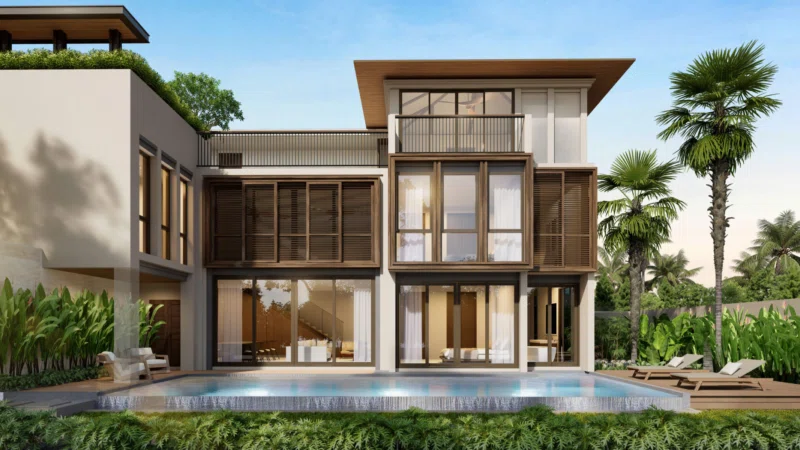
Object typeResidential
Completion dateQ3 2025
DeveloperOrigin Property
Total areafrom 355 m² to 490 m²
Down Payment2%
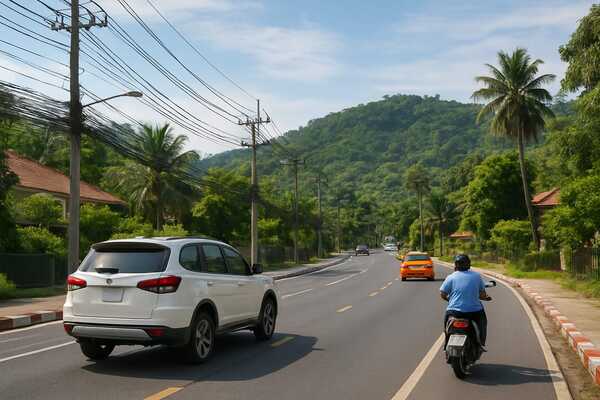
Phuket is one of the most beautiful islands in Southeast Asia, but when it comes to transportation, things here are very different from what you may be used to in large cities. Public transport is underdeveloped, distances between areas are significant, and the terrain is hilly. That’s why the question of the best ways to get around arises for everyone — from tourists to those planning to buy or rent property.
We’re sharing the real picture based on the experience of locals, agents, and people who have lived on the island for many years.
This is the optimal choice for families with children, for those planning to live in areas such as Layan, Cherng Talay, Kamala, Patong, Kata, and for property buyers who need to visit homes in different locations.
The rental cost ranges from 12,000–20,000 THB per month for a sedan or small SUV, 25,000–40,000 THB per month for a mid-size SUV, and from 60,000 THB per month for a premium-class car.
In Surin, Patong, Kamala, and Karon it can be extremely difficult to find a parking spot. In contrast, areas like Layan, Bang Tao, Nai Harn, and Mai Khao generally offer a somewhat easier parking situation.
Tip: when choosing where to live, consider parking availability at home, near shops, and by your favorite beaches.
For most expats, a motorbike is the main form of transportation. It is convenient, economical, and allows you to bypass traffic quickly.
This option is best suited for solo relocators, for those who plan to travel only short distances, and for residents of areas with good roads (Bang Tao, Rawai, Laguna).
The rental cost starts from 3,500–5,500 THB per month for a 125–155 cc scooter, 6,000–8,000 THB per month for a PCX/ADV, and from 12,000 THB per month for a big bike.
We strongly recommend always wearing helmets, avoiding roads with steep curves during rainy weather, and regularly checking your brakes, as the island has many steep descents.
Typical prices are: Kamala → Patong: 350–450 THB, Bang Tao → Airport: 600–800 THB, Rawai → Phuket Town: 300–450 THB.
This is convenient for tourists and anyone who doesn’t plan daily trips around the island. But for permanent living, the cost becomes unjustifiably high.
Phuket has no metro, trams, or full-fledged bus network. There are only three types of public transport that may be useful for tourists but are impractical for residents:
Phuket police conduct daily inspections, especially in tourist zones. The most common fines include:
Getting around Phuket depends on your lifestyle and area of residence. A motorbike is the fastest and most economical option. A car is the most comfortable choice for families and longer trips. Taxis and buses are best used as supplementary options for occasional travel.
If you plan to buy or rent property, it is important to consider road quality, parking availability, and the distance to key places — beaches, shops, schools, and more.