Thailand Steps Up Crackdown on Foreign “Nominee” Land Ownership
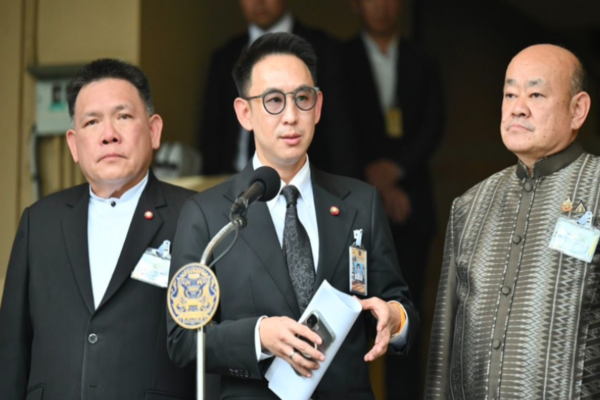
Thailand’s Ministry of Interior has announced an unprecedented nationwide campaign to identify and dismantle nominee companies used by foreigners to illegally own land in the Kingdom. According to official figures, authorities have already identified 317 nominee companies holding 480 land plots, and are preparing to force the sale of these properties. Investigations are expanding across the country, with a particular focus on provinces that have large foreign populations, including Phuket, Pattaya, and other major resort destinations.
For Phuket real estate investors, this is one of the most significant developments of 2026. Here’s what is happening, what risks it creates, and how to invest safely in the current environment.
What Happened?
At a recent press conference, officials from Thailand’s Ministry of Interior announced that they had uncovered hundreds of companies established solely to circumvent Thailand’s restrictions on foreign land ownership.
Under Thai law, foreigners are generally prohibited from owning land directly, except in limited circumstances, such as investments approved by the Board of Investment (BOI) or a few other narrowly defined categories.
The nominee structure currently under investigation typically works like this: a foreign individual (or group of foreigners) establishes a Thai company in which 51% of the shares are formally owned by Thai nominee shareholders, while the foreign investor remains the true beneficial owner. The company then purchases land on behalf of the foreign investor.
Although this practice has existed for years, Thai authorities began a systematic crackdown in 2026.
Key announcements from the Ministry of Interior:
- 317 nominee companies have been identified.
- These companies own 480 land plots.
- The land will be confiscated and sold through legal enforcement procedures.
- Investigations are expanding nationwide, particularly in provinces with significant foreign populations.
- Phuket has become one of the primary targets, with authorities also preparing to demolish illegal beachfront structures at Bang Tao Beach, Freedom Beach, and Nui Beach.
Why This Matters for Phuket's Property Market
Phuket has one of the highest concentrations of foreign-owned property interests in Thailand. For decades, the island has attracted investors from Russia, China, Europe, and the Middle East, and historically some land transactions were conducted through nominee structures.
The government's intensified enforcement has several important implications.
Increased Risk of Asset Loss
Investors who acquired land through nominee companies may face confiscation of their properties if authorities determine the ownership structure violates Thai law.
Cooling Demand for Land Purchased Through Grey Structures
Demand for development land purchased via nominee arrangements is expected to decline sharply as buyers become increasingly cautious.
Shift Toward Legal Ownership Structures
Investors are increasingly focusing on legally recognized ownership options, including:
- Freehold condominiums (within the foreign ownership quota)
- Long-term leasehold arrangements (up to 30 years)
- BOI-approved investment projects
Higher Demand for Legally Structured Properties
As uncertainty surrounding land ownership grows, buyers are favoring properties with clear legal documentation. This trend is expected to support prices for high-quality condominiums and properly structured villas.
Illegal Construction Demolitions Already Underway
Alongside the investigation into nominee ownership, Phuket authorities are actively removing illegal buildings located on protected beachfront land.
Current enforcement includes:
- Bang Tao Beach – demolition of structures built without permits or on state-owned land.
- Freedom Beach – action against developments violating environmental regulations.
- Nui Beach – removal of structures that breach coastal land-use regulations.
These measures reflect a broader government effort to restore control over public land and coastal areas that have experienced decades of semi-legal development.
Paradoxically, this is positive news for legitimate investors. Greater enforcement creates a more transparent market and reduces the risk of purchasing properties with hidden legal issues.
Foreign Land Ownership Rules in Thailand: A Quick Overview
Understanding Thailand's land ownership laws helps explain why these investigations are possible.
Foreigners Cannot Own Land Directly
Thailand's Land Code generally prohibits direct land ownership by foreign nationals.
Limited Exceptions
Foreigners may legally acquire land only under specific circumstances, including:
- Through a genuinely operating Thai company in which Thai shareholders own at least 51% (not merely nominee shareholders);
- Through BOI-approved investment programs;
- Under certain special investment or residency schemes.
Freehold Condominiums
Foreigners may legally own condominium units on a freehold basis, provided foreign ownership within the building does not exceed 49% of the total saleable area. This remains the safest and most transparent ownership structure.
Leasehold
Long-term lease agreements of up to 30 years, with renewal options, provide a legally recognized method of controlling land or villas when properly drafted and registered.
Villas
A foreign buyer may legally own the villa (the building itself), while the land is held either under a leasehold agreement or by a properly structured Thai company operating in full compliance with Thai law.
The current enforcement campaign is aimed specifically at nominee companies used to disguise illegal land ownership.
The Bigger Picture: Thailand's Property Market
The nominee company crackdown comes amid Thailand's most significant real estate market correction in nearly a decade.
According to the Real Estate Information Center (REIC) and industry sources:
- New condominium construction approvals have fallen by approximately 70%.
- Developers are slowing new launches and selling portions of their land banks to preserve liquidity.
- Unsold inventory remains high, particularly in the luxury condominium and mass-market townhouse sectors.
- At the same time, property transfers and mortgage activity increased modestly during early 2026, driven mainly by homes priced below THB 3 million, reflecting genuine end-user demand.
Against this backdrop, Phuket remains one of Thailand's strongest-performing markets.
Property transfers and buyer activity continue to outperform most provinces, supported by:
- international demand,
- tourism,
- international schools,
- long-term rental demand,
- and limited land supply.
The result is a two-speed market: while Thailand as a whole is experiencing a correction, Phuket continues to demonstrate resilience. However, today's market requires investors to rely exclusively on fully compliant legal ownership structures.
How to Invest Safely in Phuket Real Estate in 2026
As regulatory enforcement becomes increasingly strict, legal due diligence has never been more important.
At Jungle House Phuket, every client transaction follows these principles.
1. Freehold Condominiums — The Safest Option
Foreign buyers can legally own condominium units within the 49% foreign ownership quota.
Before purchasing, we verify:
- availability within the foreign quota,
- developer reputation,
- Environmental Impact Assessment (EIA) approval,
- proper title registration with the Land Department.
2. Leasehold for Land and Villas
A properly registered long-term lease (up to 30 years) provides strong legal protection and allows future resale of the property.
This remains one of the best ownership structures for villa investments.
3. BOI-Approved Projects
Investors committing THB 40 million or more may qualify for land ownership through Thailand's Board of Investment.
Although more complex, this route offers a fully legal ownership solution for large-scale investors.
4. Comprehensive Legal Due Diligence
Before every purchase, we conduct a full legal review covering:
- land or property title verification;
- confirmation that no nominee ownership structures exist;
- outstanding debts, encumbrances, or legal disputes;
- developer licensing and regulatory compliance;
- verification that the property matches all advertised specifications.
5. Working Only with Established Developers
We partner exclusively with developers that have:
- a proven delivery record;
- financial stability;
- strong market reputation.
During a market correction, choosing experienced and transparent developers becomes even more important, as smaller or poorly managed companies are often the first to encounter financial difficulties.
Final Thoughts
Thailand's crackdown on nominee land ownership represents a normalization of the property market, not a crisis for legitimate investors.
Those who relied on grey ownership structures face significant legal risks. However, investors who purchase through fully compliant legal channels stand to benefit from:
- reduced competition from illegal market participants;
- greater transparency and legal certainty;
- stronger demand for quality condominiums and properly structured villas, supporting long-term property values.
Phuket remains one of Thailand's most resilient real estate markets. Strong international demand, world-class infrastructure, a thriving tourism sector, and limited land availability continue to make the island an attractive investment destination—even amid Thailand's broader property market correction.
The key to successful investing in 2026 is straightforward: invest legally, conduct thorough due diligence, and work with experienced professionals who understand Thailand's evolving regulatory landscape.